
 Image Source
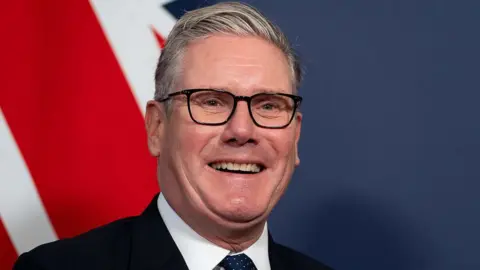
The Premier's very notable reorientation on the UK's after-Brexit ties to the European Union this weekend was designed to communicate to industry, to Brussels, and to other European capitals, alongside his party members.
A Revised Process for Relations
Tighter after-Brexit trade links are currently anticipated to be looked at as within an annual process of direct negotiations rather than solely at this year's structured evaluation of the trade and cooperation agreement.
This constituted the clear response to growing calls regarding a broader post-Brexit overhaul that involved rejoining the customs union.
Internal Momentum
Some parliamentarians, union leaders and government figures have added their voices to proposals crystallised by parliamentary moves last year that led to a advisory motion.
"It is better looking to the European single market rather than the customs bloc for our closer integration," the leader remarked.
He gave a clear answer that returning to the customs union was a lower priority, as it conflicts with what he considers a key achievement of the past year: the securing of comprehensive trade pacts with the United States and India, with additional expected in the Middle East.
Emphasising the Single Market
Instead of the common external tariff, his primary aim is on building a "stronger bond" with the EU's single market, which would avoid tearing up those new trade deals with other nations.
When the UK officially exited the EU in January 2021, the agreement at the time prioritised freedom from EU regulations over barrier-free exports for UK businesses to the continent.
The ongoing reset outlines realigning with EU rules in three key areas to facilitate the easier passage of trade: agricultural products, power, and carbon trading.
Commercial Requests
A prominent industry organisation last month published a detailed set of additional asks in various industries to aid exporters overcome post-Brexit red tape that has hit the export of products.
Its own survey reported that a significant number of business members agreed that the UK-EU trade deal was failing to support business expansion.
A host of further domains could, realistically, see a comparable strategy – convergence with single market rules – in exchange for lowering post-Brexit barriers across production, in vehicles, pharmaceuticals, or for example in VAT procedures.
European Perception
Member states were unimpressed by the limited scope in earlier discussions, notably the London's refusal of proposals floated by some experts regarding the simplified access of British exports to the single market.
The precise arrangements on power sharing and agricultural regulations is remains to be finalised. A initiative for UK defence firms to be participate in a €150bn security initiative has been delayed over the cost of the membership fee, after opposition from Paris. Another nation has entered the programme.
Geopolitical Landscape
The UK has concluded arrangements to return to a university exchange programme and to further negotiate a youth mobility program. This has facilitated progress for subsequent negotiations.
Some UK insiders suggest that the issuing of a key US strategy document has altered the backdrop on UK European policy.
The document stated that the US would "foster opposition" to Europe's current trajectory and commended the "increasing clout" of patriotic European parties.
In government circles, there is a growing awareness that the rapidly changing world has evolved further.
Political Pressures
At home, the administration also foresees being challenged on European policy not only one opposition party, but additionally a further party, which is focusing on its traditional heartlands in local votes.
The Premier's weekend remarks are the product of a combination of business needs, domestic pressures and global dynamics as the UK starts a year that will commemorate the ten-year mark of the landmark EU vote.


